

Dr. Tom Waddell was an incredible athlete and an incredible person who would not be silenced by those who tried to shut him down.
As an undergraduate, Waddell attended Springfield College in Massachusetts on a track scholarship. A defining moment of his life occurred with the sudden death of his best friend and teammate. Waddell switched his major to pre-medicine and strived to live a life supporting others. Waddell attended medical school at New Jersey College of Medicine until he was drafted into the Army in 1966.
He expected that the government would ship him off to Vietnam. Instead, he represented his country in a different way: as an athlete. A New Jersey native, Waddell represented the United States in the 1968 Summer Olympics. He competed in the decathlon, finishing sixth out of thirty-three competitors in Mexico City.
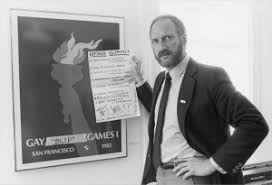
Dr. Tom Waddell and the Gay Games
After his professional career ended due to a knee injury, he returned to his medical career and joined a gay bowling league in San Francisco. The structure and camaraderie of this kind of event inspired Dr. Waddell to pursue something bigger. He founded a “Gay Olympics,” a welcoming space for athletes of all identities to compete and celebrate pride. The idea was met with excitement from the LGBTQ+ community, and the first Gay Olympics were scheduled to take place in San Francisco in 1982 in the form of a sports competition and arts festival.
From others outside of the community, the event was met with overwhelming hatred. With the support of their sponsors, the International Olympic Committee sued him over the use of the word “Olympics.” Other organizations had used the name “Olympics” in the past without legal repercussions, but the IOC argued the Gay Olympics could be detrimental to their brand. In the face of hatred and legal adversity, Tom stood firm, still committed to helping others however necessary. He renamed the event the Gay Games and strengthened its message of inclusion and equality.
Dr. Waddell was diagnosed with AIDS in 1985. He still competed in the Gay Games II in 1986 and won the javelin despite his medical struggles. On July 11, 1987, AIDS took Tom’s life when he was just 49.
Remembering Dr. Tom Waddell Through the AIDS Memorial Quilt
After Tom’s death, those who looked up to Tom wanted to remember his life. The AIDS Memorial Quilt was a new memorial that thousands of grieving loved ones were contributing to, ensuring the stories of their loved ones and the disastrous story of HIV/AIDS would always be remembered.
One of those panels was created by a fan who wanted to immortalize Tom and call out those who tried to silence him. Tom’s panel on Block 687 calls out the VISA corporation, which funded the US Olympic Committee in their decision to sue Dr. Waddell and the Gay Games. The fan who made it asked the public to cut their Visa cards in half and send one half to VISA, and send her the other half so that she could use the Visa cards to create Tom’s panel.
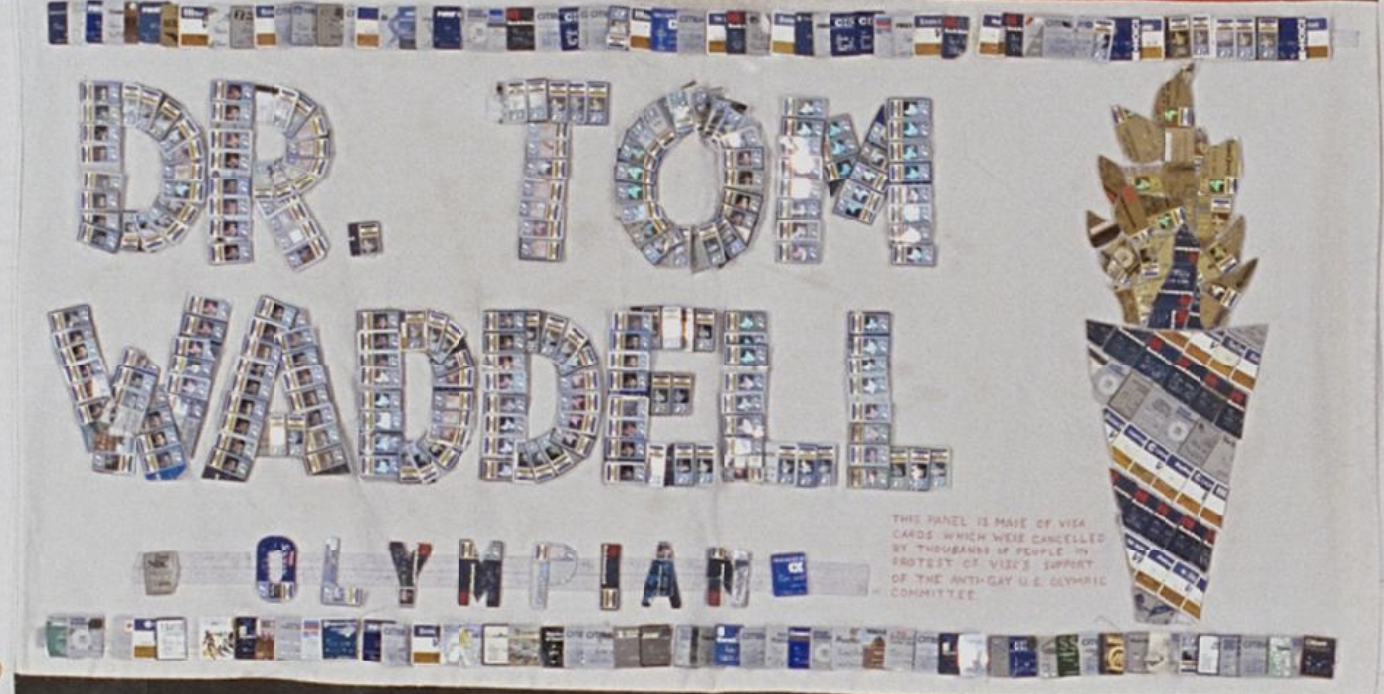
On this panel, the fan immortalized Dr. Tom Waddell’s name, the word Olympian, an Olympic torch, and a border with these cancelled Visa cards. At the bottom corner, the woman who made the panel wrote: “This panel is made of Visa cards, which were cancelled by thousands of people in protest of Visa’s support of the Anti-Gay U.S. Olympic Committee.”
How You Can Make a Difference
In a time when so many people and groups are trying to silence those who are different, be like Dr. Tom Waddell and stand up for those who are sometimes unable to stand up for themselves. You can see Dr. Waddell’s other AIDS Quilt panels and search for other names in our Interactive AIDS Quilt.
Like the fan who stood up to Visa and immortalized Dr. Tom Waddell’s name, you can make an AIDS Quilt to honor someone who died from HIV/AIDS, or donate to support the ongoing maintenance of the Quilt’s thousands of panels. Learn more about the AIDS Quilt here:
