

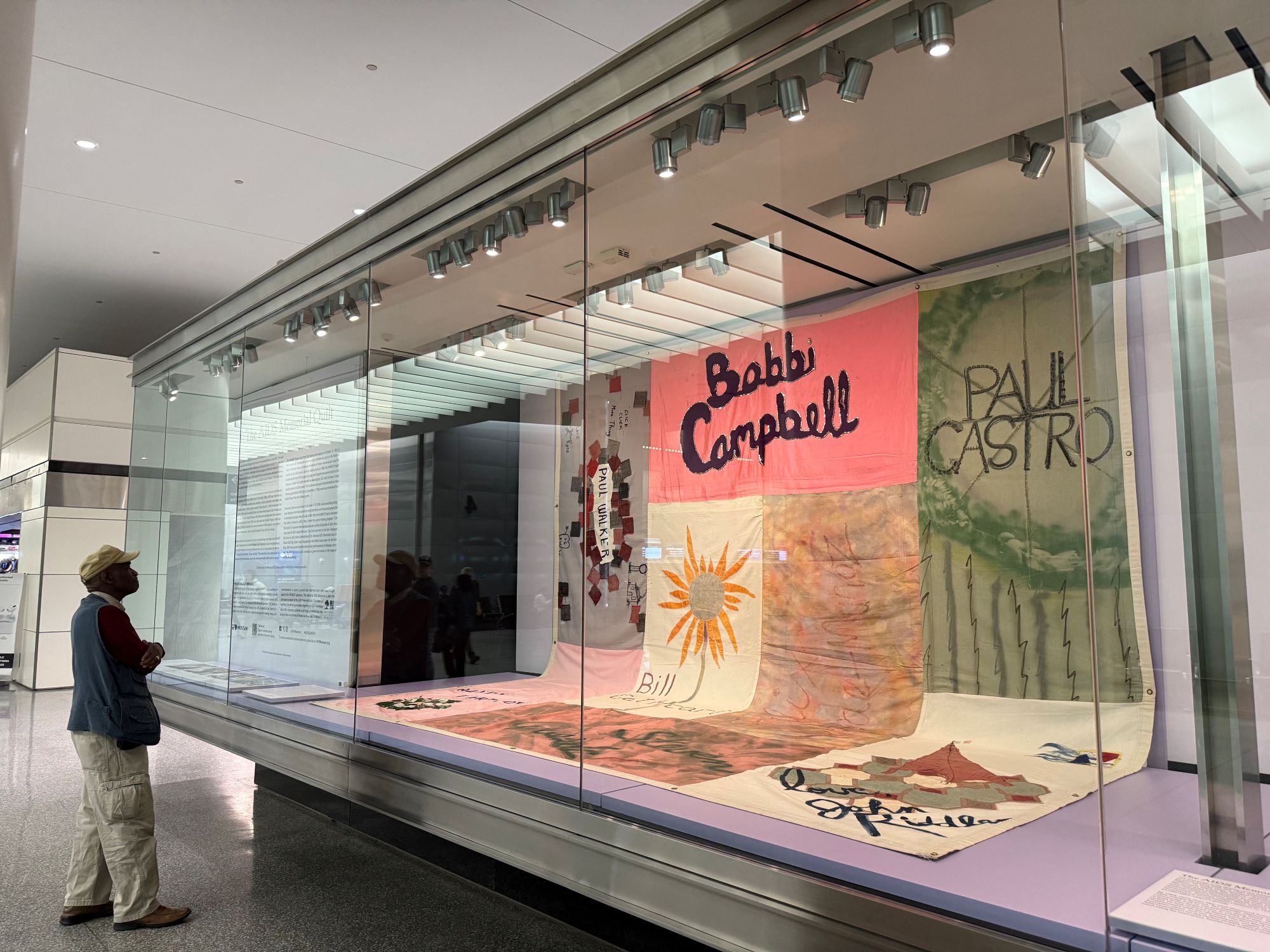
The San Francisco International Airport (SFO) is a gateway to the far reaches of the world for millions of travelers each year. Like many American airports, one of SFO’s busiest stretches is around the Thanksgiving holiday. SFO served over 1.8 million travelers in the week and a half around the 2015 holiday, breaking its 2019 Thanksgiving record of 1.78 million (SFO).
Some travelers were parents flying with their children to reconnect with other branches of their family tree. Others were students flying home for the holiday to see friends and celebrate with their families. Imagine every single one of those 1.8 million passengers got sick and died. Then the next Thanksgiving, 1.8 million more passengers got sick and died. It would take 25 years’ worth of SFO Thanksgiving travelers to die in order to eclipse the estimated 44.1 million HIV/AIDS deaths that have occurred since the start of the epidemic (UNAIDS).
While it's difficult to put those 44.1 million deaths into context, the AIDS Memorial Quilt takes a different angle to end the health and social justice issues at the core of the HIV/AIDS crisis: it highlights the individual lives that were taken rather than the statistics that often dehumanize their deaths.
SFO Museum’s AIDS Quilt Display
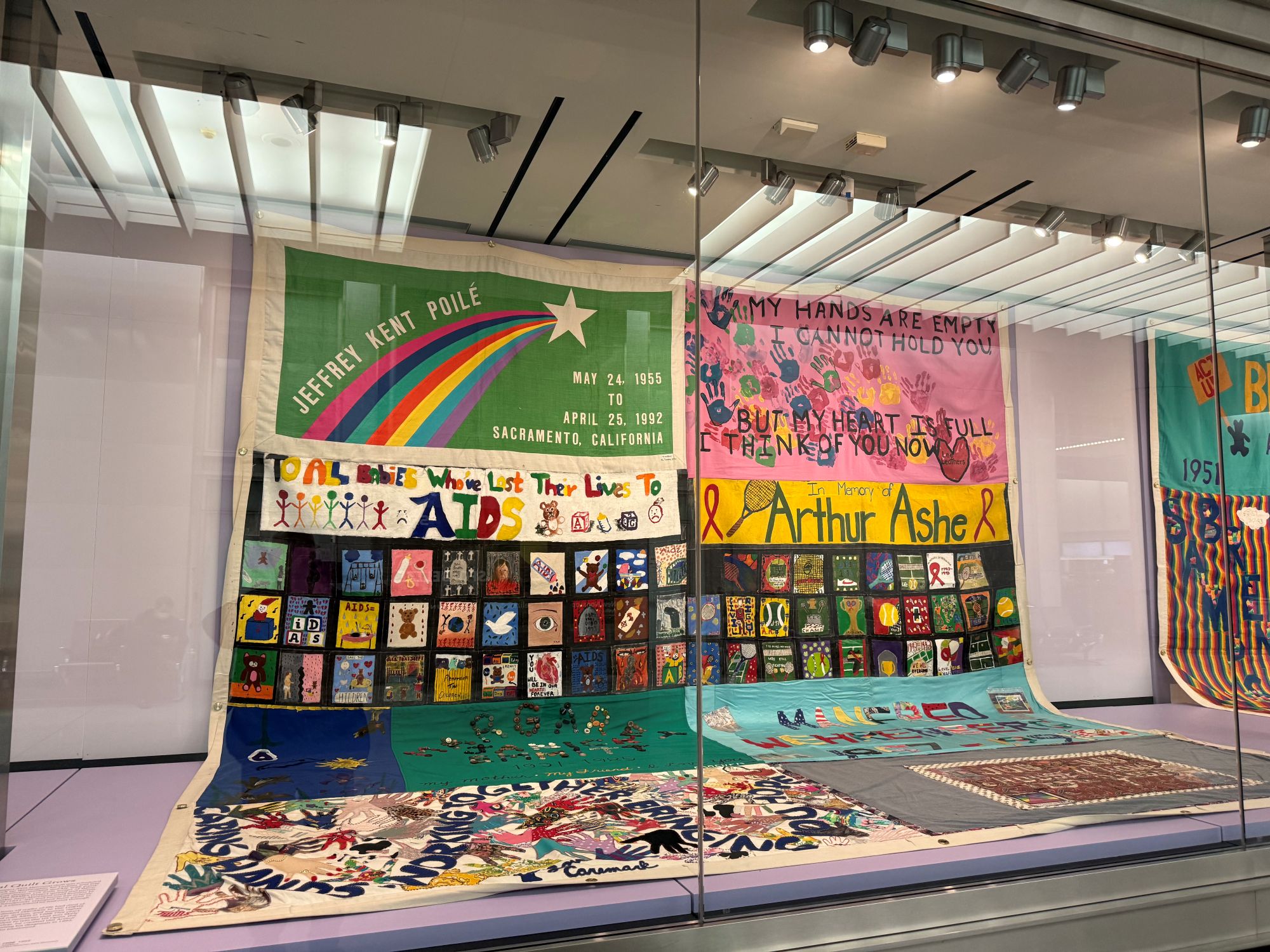
Individuals and groups craft AIDS Memorial Quilt panels to honor the personal lives and stories of those who died. Today, there are roughly 50,000 panels dedicated to more than 110,000 individuals in this epic 54-ton tapestry. Over the nearly 40 years that the Quilt has existed, panels have traveled internationally and across the United States, from the White House lawn to universities and libraries to the recent display at SFO Museum.
Located throughout SFO’s terminals at more than 25 sites, SFO Museum strives to inspire a global audience with programming on a broad range of subjects. From 02/08/2025 to 03/22/26, the museum displayed 6 blocks of the Quilt, showcasing 48 individual panels to travelers in SFO’s bustling International Terminal. “You could write a book on just one block,” said Daniel Calderon, Curator of Exhibitions at SFO Museum.
When asked about the Quilt’s personal impact, Calderon recalls his first trip to the AIDS Memorial Quilt warehouse. There, panels are stored and maintained by the National AIDS Memorial team and its incredible volunteers. “It was shocking. Seeing all the thousands of blocks stacked, it was very powerful.” Seeing the volume of lives lost represented in the Quilt’s individual panels has inspired sorrow and shock in so many. It is a major reason why AIDS Quilt Displays, like SFO Museum’s, are an effective way to teach about the importance of health and social justice.
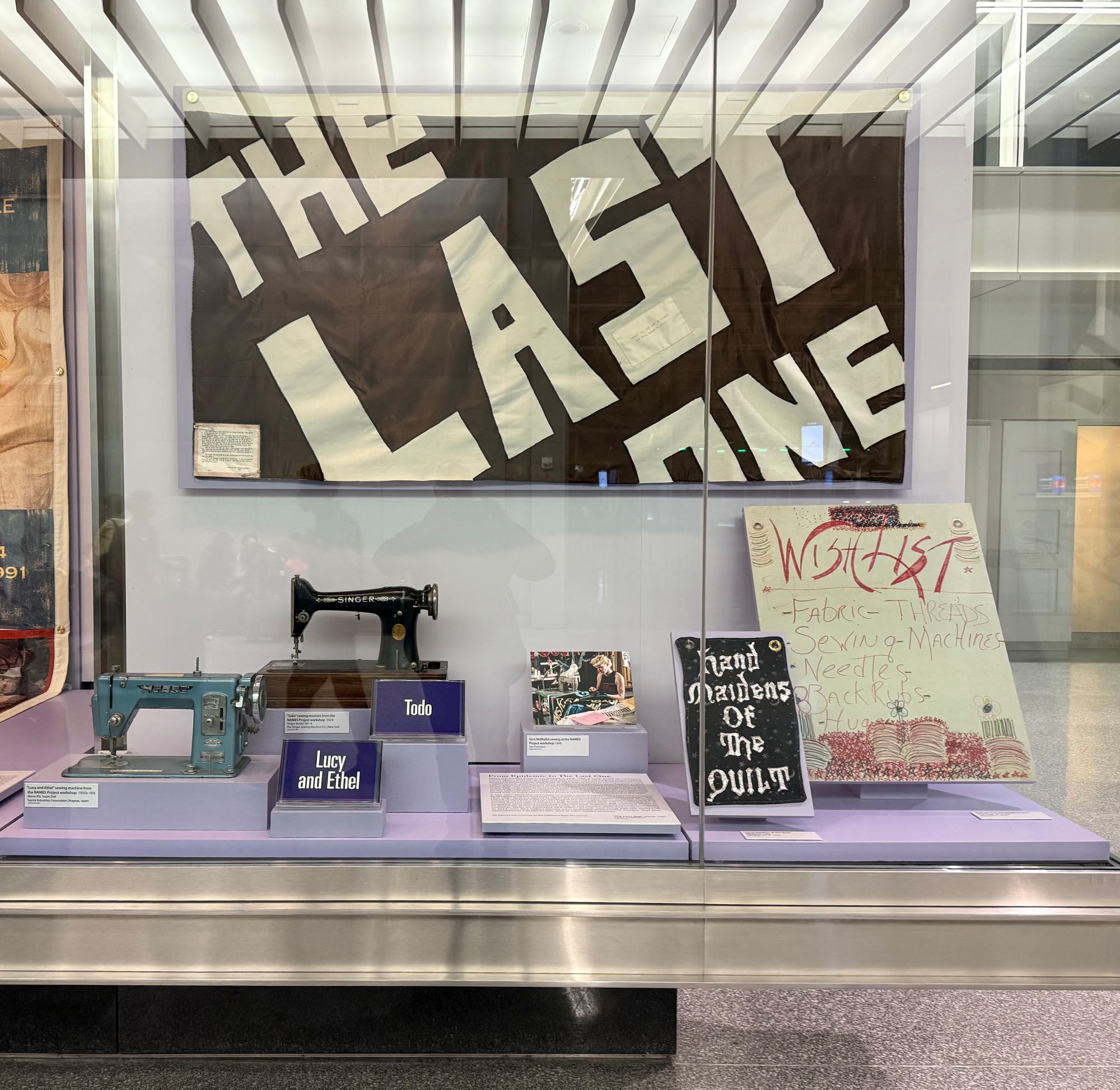
“You don’t often find subjects that combine history, current relevance, and community art at this scale,” said Calderon about why the museum wanted to host the Quilt at the airport. “There’s power in standing up for people around you. The change that people can make at a grassroots level is incredible. To move from fear and anger and transform them into the power of activism. We are so grateful to have hosted the Quilt at the airport.”
Thank you to Daniel Calderon and SFO Museum for sharing the power of the AIDS Memorial Quilt with their visitors. Like them, you can bring the Quilt to your community with an AIDS Memorial Quilt Display. Learn more:
Display the AIDS Memorial Quilt
